Welcome to Code Forum!

Join a community that supports you and your coding journey from day one. We strive to be a friendly, supportive community that empowers everyone to be better developers. By registering with us, you'll be able to discuss, share and private message with other members of our community.

SignUp Now!
  • Guest, before posting your code please take these rules into consideration:
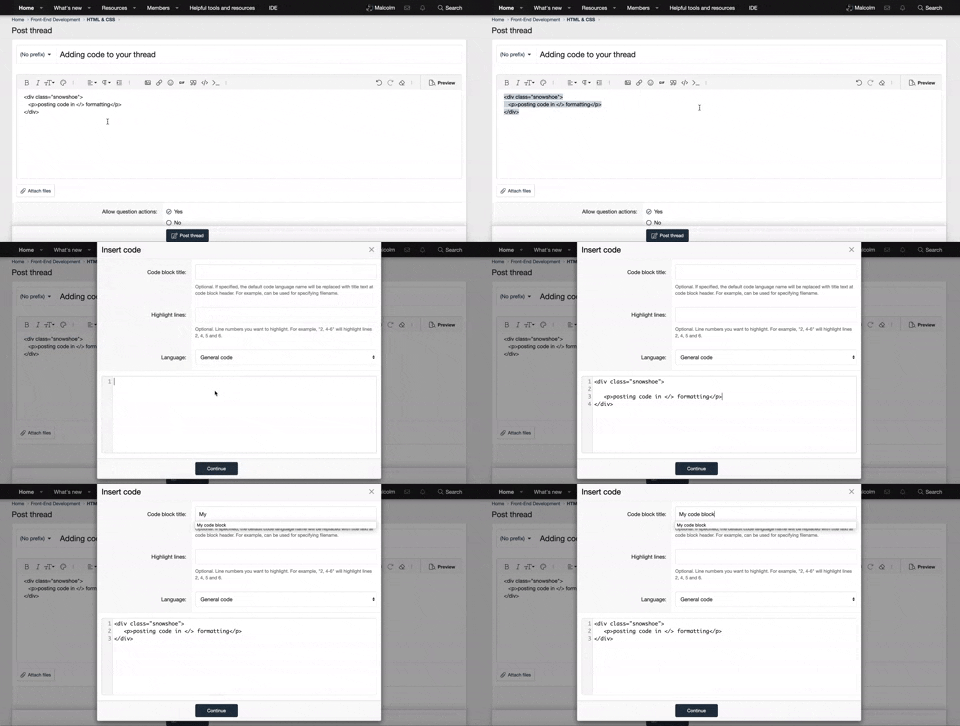
    • It is required to use our BBCode feature to display your code. While within the editor click < / > or >_ and place your code within the BB Code prompt. This helps others with finding a solution by making it easier to read and easier to copy.
    • You can also use markdown to share your code. When using markdown your code will be automatically converted to BBCode. For help with markdown check out the markdown guide.
    • Don't share a wall of code. All we want is the problem area, the code related to your issue.

    GIF shows where to locate </> in the thread and or post editor toolbar.
    To learn more about how to use our BBCode feature, review our "How to post your code into threads" here.

    Thank you, Code Forum.

Python Rearranging elements in Python

I am confused on lines 9-11, how does elem2 change values, surely it would just say as one since it's just swapping values with it's self? It's confusing because in order for this sequence to work it needs to change, I just don't know how it is doing so.

[CODE lang="python" highlight="9-11"]def fib(n):
if n < 1:
return None
if n < 3:
return 1

elem1 = elem2 = 1
sum = 0
for i in range(3, n + 1):
sum = elem1 + elem2
elem1, elem2 = elem2, sum
return sum

for n in range(1, 5): # testing
print(n, "->", fib(n))

[/CODE]
 
Hi Steve389,

Is'nt the following:
Python:
elem1, elem2 = elem2, sum
Equivalent to?:
Python:
elem1 = elem2
elem2 = sum
'elem1' takes the old value of 'elem2' and elem2 is assigned with the current total (summation).
 
Back
Top Bottom