Welcome to Code Forum!

Join a community that supports you and your coding journey from day one. We strive to be a friendly, supportive community that empowers everyone to be better developers. By registering with us, you'll be able to discuss, share and private message with other members of our community.

SignUp Now!
  • Guest, before posting your code please take these rules into consideration:
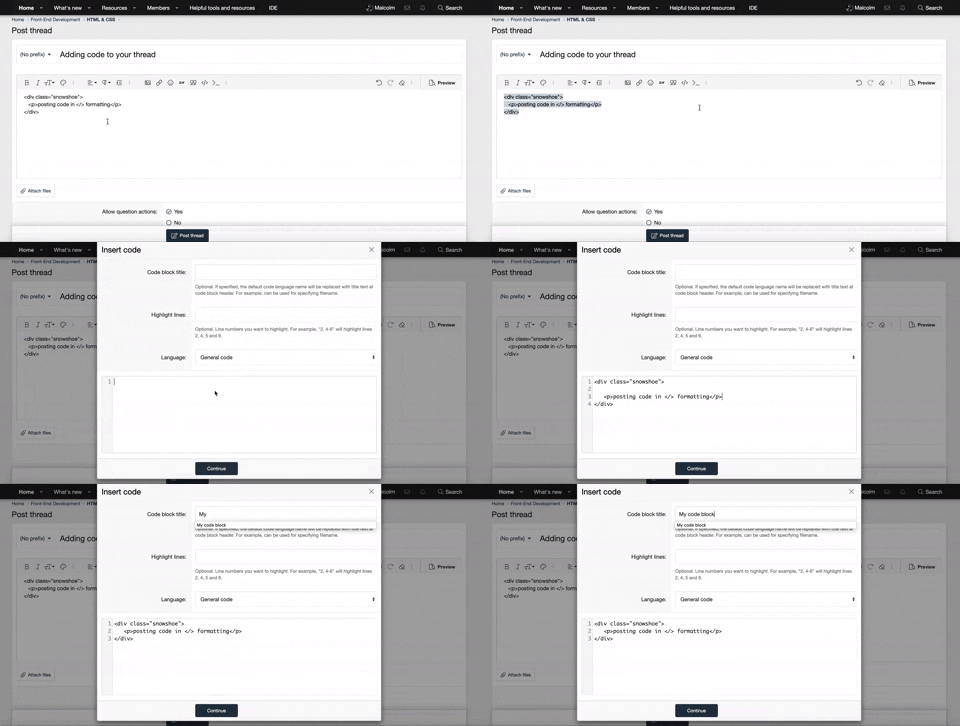
    • It is required to use our BBCode feature to display your code. While within the editor click < / > or >_ and place your code within the BB Code prompt. This helps others with finding a solution by making it easier to read and easier to copy.
    • You can also use markdown to share your code. When using markdown your code will be automatically converted to BBCode. For help with markdown check out the markdown guide.
    • Don't share a wall of code. All we want is the problem area, the code related to your issue.

    GIF shows where to locate </> in the thread and or post editor toolbar.
    To learn more about how to use our BBCode feature, review our "How to post your code into threads" here.

    Thank you, Code Forum.
I am having troubles with trying to figure out how to use a payment Api. So, I asked ChatGPT to help me. Here is the code:

Python:
import jsonfrom http.server import BaseHTTPRequestHandler, HTTPServerclass PaymentHandler(BaseHTTPRequestHandler):    def _send_response(self, status_code, data):        self.send_response(status_code)        self.send_header('Content-Type', 'application/json')        self.end_headers()        self.wfile.write(json.dumps(data).encode('utf-8'))    def do_POST(self):        if self.path == '/process_payment':            content_length = int(self.headers['Content-Length'])            data = json.loads(self.rfile.read(content_length))            # Validate input data            if not data.get('amount') or not data.get('card_number') or not data.get('expiry_date') or not data.get('cvv'):                self._send_response(400, {'error': 'Incomplete payment information'})                return            # Mock payment processing logic            payment_result = self.mock_process_payment(data['amount'], data['card_number'], data['expiry_date'], data['cvv'])            if payment_result:                self._send_response(200, {'message': 'Payment processed successfully'})            else:                self._send_response(500, {'error': 'Payment processing failed'})        else:            self._send_response(404, {'error': 'Endpoint not found'})    def mock_process_payment(self, amount, card_number, expiry_date, cvv):        # In a real implementation, you would integrate with a payment gateway here        # For this example, we'll assume a successful payment if the CVV is '123'        return cvv == '123'def run(server_class=HTTPServer, handler_class=PaymentHandler, port=8000):    server_address = ('', port)    httpd = server_class(server_address, handler_class)    print(f"Starting server on port {port}...")    httpd.serve_forever()if __name__ == '__main__':    run()

I need help on tutorials with all the plugins and I need help with making it secure. If anyone can fix this code and give me tutorials on the plugins. I will give you major credit on the website. (this code was written by ChatGPT)
Thank you!
 
I am having troubles with trying to figure out how to use a payment Api. So, I asked ChatGPT to help me. Here is the code:

Python:
import jsonfrom http.server import BaseHTTPRequestHandler, HTTPServerclass PaymentHandler(BaseHTTPRequestHandler):    def _send_response(self, status_code, data):        self.send_response(status_code)        self.send_header('Content-Type', 'application/json')        self.end_headers()        self.wfile.write(json.dumps(data).encode('utf-8'))    def do_POST(self):        if self.path == '/process_payment':            content_length = int(self.headers['Content-Length'])            data = json.loads(self.rfile.read(content_length))            # Validate input data            if not data.get('amount') or not data.get('card_number') or not data.get('expiry_date') or not data.get('cvv'):                self._send_response(400, {'error': 'Incomplete payment information'})                return            # Mock payment processing logic            payment_result = self.mock_process_payment(data['amount'], data['card_number'], data['expiry_date'], data['cvv'])            if payment_result:                self._send_response(200, {'message': 'Payment processed successfully'})            else:                self._send_response(500, {'error': 'Payment processing failed'})        else:            self._send_response(404, {'error': 'Endpoint not found'})    def mock_process_payment(self, amount, card_number, expiry_date, cvv):        # In a real implementation, you would integrate with a payment gateway here        # For this example, we'll assume a successful payment if the CVV is '123'        return cvv == '123'def run(server_class=HTTPServer, handler_class=PaymentHandler, port=8000):    server_address = ('', port)    httpd = server_class(server_address, handler_class)    print(f"Starting server on port {port}...")    httpd.serve_forever()if __name__ == '__main__':    run()

I need help on tutorials with all the plugins and I need help with making it secure. If anyone can fix this code and give me tutorials on the plugins. I will give you major credit on the website. (this code was written by ChatGPT)
Thank you!

Might want to fix the formatting there bud.... python/pyscript is not a good read when it's in minimized version
 
okay I will try, Here:
Code:
import json
import hashlib
from http.server import BaseHTTPRequestHandler, HTTPServer
from cryptography.fernet import Fernet


# Generate a random key for encryption
encryption_key = Fernet.generate_key()
cipher_suite = Fernet(encryption_key)


class PaymentHandler(BaseHTTPRequestHandler):
    def _send_response(self, status_code, data):
        self.send_response(status_code)
        self.send_header('Content-Type', 'application/json')
        self.end_headers()
        self.wfile.write(json.dumps(data).encode('utf-8'))


    def do_POST(self):
        if self.path == '/process_payment':
            try:
                content_length = int(self.headers['Content-Length'])
                encrypted_data = self.rfile.read(content_length)
                decrypted_data = cipher_suite.decrypt(encrypted_data)
                data = json.loads(decrypted_data)


                # Validate input data
                if not self.validate_payment_data(data):
                    self._send_response(400, {'error': 'Invalid payment information'})
                    return


                # Mock payment processing logic
                payment_result = self.mock_process_payment(data['amount'], data['card_number'], data['expiry_date'], data['cvv'])


                if payment_result:
                    self._send_response(200, {'message': 'Payment processed successfully'})
                else:
                    self._send_response(500, {'error': 'Payment processing failed'})
            except Exception as e:
                self._send_response(500, {'error': 'Internal server error'})
                # Log the exception for debugging
                print(f"Error processing payment: {e}")
        else:
            self._send_response(404, {'error': 'Endpoint not found'})


    def validate_payment_data(self, data):
        if (
            'amount' not in data
            or 'card_number' not in data
            or 'expiry_date' not in data
            or 'cvv' not in data
        ):
            return False


        # Additional validation logic can be implemented here
        return True


    def mock_process_payment(self, amount, card_number, expiry_date, cvv):
        # In a real implementation, you would integrate with a payment gateway here
        # For this example, we'll assume a successful payment if the CVV is '123'
        return cvv == '123'


def run(server_class=HTTPServer, handler_class=PaymentHandler, port=8000):
    server_address = ('', port)
    httpd = server_class(server_address, handler_class)
    print(f"Starting server on port {port}...")
    httpd.serve_forever()


if __name__ == '__main__':
    run()
 
okay I will try, Here:
Code:
import json
import hashlib
from http.server import BaseHTTPRequestHandler, HTTPServer
from cryptography.fernet import Fernet


# Generate a random key for encryption
encryption_key = Fernet.generate_key()
cipher_suite = Fernet(encryption_key)


class PaymentHandler(BaseHTTPRequestHandler):
    def _send_response(self, status_code, data):
        self.send_response(status_code)
        self.send_header('Content-Type', 'application/json')
        self.end_headers()
        self.wfile.write(json.dumps(data).encode('utf-8'))


    def do_POST(self):
        if self.path == '/process_payment':
            try:
                content_length = int(self.headers['Content-Length'])
                encrypted_data = self.rfile.read(content_length)
                decrypted_data = cipher_suite.decrypt(encrypted_data)
                data = json.loads(decrypted_data)


                # Validate input data
                if not self.validate_payment_data(data):
                    self._send_response(400, {'error': 'Invalid payment information'})
                    return


                # Mock payment processing logic
                payment_result = self.mock_process_payment(data['amount'], data['card_number'], data['expiry_date'], data['cvv'])


                if payment_result:
                    self._send_response(200, {'message': 'Payment processed successfully'})
                else:
                    self._send_response(500, {'error': 'Payment processing failed'})
            except Exception as e:
                self._send_response(500, {'error': 'Internal server error'})
                # Log the exception for debugging
                print(f"Error processing payment: {e}")
        else:
            self._send_response(404, {'error': 'Endpoint not found'})


    def validate_payment_data(self, data):
        if (
            'amount' not in data
            or 'card_number' not in data
            or 'expiry_date' not in data
            or 'cvv' not in data
        ):
            return False


        # Additional validation logic can be implemented here
        return True


    def mock_process_payment(self, amount, card_number, expiry_date, cvv):
        # In a real implementation, you would integrate with a payment gateway here
        # For this example, we'll assume a successful payment if the CVV is '123'
        return cvv == '123'


def run(server_class=HTTPServer, handler_class=PaymentHandler, port=8000):
    server_address = ('', port)
    httpd = server_class(server_address, handler_class)
    print(f"Starting server on port {port}...")
    httpd.serve_forever()


if __name__ == '__main__':
    run()
ok so first thing's first...
A) Does this actually work?
B) Do YOU understand what is going on in the code?
C) Why choose ChatGPT?
 
Number one I don't know.
Number two I don't. That is why I posted this on the forum.
Number three I can't figure out which payment Api to use.
Have you tried running it? 🙂 Can't tell if something works or not if one never runs it, right?
Well, I think we should take it back a few steps and actually look at what the code is actually doing before we move on to the actual payment gateway integration, and code security... Nothing is more dangerous as far as security goes, than a dev who does not know what his own and/or copied-pasted code does. Can't correctly secure what one does not fully know and/or understand properly, can we?
As far as payment API's are concerned... that is basically up to you. You are the dev, you are the architect to your system. There is no "one size fits all" solution. Best advice I can personally give you on how to choose one: do a bit of research into what payment api's are available given the language you are using... and pick the one that aligns with what you need
 
Last edited:
I don't have a debit card. Once i get one, I will run it though.
When I put this into my website, this error showed up:
Traceback (most recent call last):

Code:
File "/home/pyodide/pyscript/_internal.py", line 104, in run_pyscript
    result = eval_code(code, globals=__main__.__dict__)
             ^^^^^^^^^^^^^^^^^^^^^^^^^^^^^^^^^^^^^^^^^^
  File "/lib/python311.zip/_pyodide/_base.py", line 468, in eval_code
    .run(globals, locals)
     ^^^^^^^^^^^^^^^^^^^^
  File "/lib/python311.zip/_pyodide/_base.py", line 310, in run
    coroutine = eval(self.code, globals, locals)
                ^^^^^^^^^^^^^^^^^^^^^^^^^^^^^^^^
  File "<exec>", line 4, in <module>
ModuleNotFoundError: The module 'cryptography' is included in the Pyodide distribution, but it is not installed.
You can install it by calling:
  await micropip.install("cryptography") in Python, or
  await pyodide.loadPackage("cryptography") in JavaScript
See https://pyodide.org/en/stable/usage/loading-packages.html for more details.
 
I don't have a debit card. Once i get one, I will run it though.
When I put this into my website, this error showed up:
Traceback (most recent call last):

Code:
File "/home/pyodide/pyscript/_internal.py", line 104, in run_pyscript
    result = eval_code(code, globals=__main__.__dict__)
             ^^^^^^^^^^^^^^^^^^^^^^^^^^^^^^^^^^^^^^^^^^
  File "/lib/python311.zip/_pyodide/_base.py", line 468, in eval_code
    .run(globals, locals)
     ^^^^^^^^^^^^^^^^^^^^
  File "/lib/python311.zip/_pyodide/_base.py", line 310, in run
    coroutine = eval(self.code, globals, locals)
                ^^^^^^^^^^^^^^^^^^^^^^^^^^^^^^^^
  File "<exec>", line 4, in <module>
ModuleNotFoundError: The module 'cryptography' is included in the Pyodide distribution, but it is not installed.
You can install it by calling:
  await micropip.install("cryptography") in Python, or
  await pyodide.loadPackage("cryptography") in JavaScript
See https://pyodide.org/en/stable/usage/loading-packages.html for more details.
you don't need to have a real debit credit card... there are test cc numbers that you can use... believe me, I've worked with a few... most famous
4111-1111-1111-1111
 
I don't have a debit card. Once i get one, I will run it though.
When I put this into my website, this error showed up:
Traceback (most recent call last):

Code:
File "/home/pyodide/pyscript/_internal.py", line 104, in run_pyscript
    result = eval_code(code, globals=__main__.__dict__)
             ^^^^^^^^^^^^^^^^^^^^^^^^^^^^^^^^^^^^^^^^^^
  File "/lib/python311.zip/_pyodide/_base.py", line 468, in eval_code
    .run(globals, locals)
     ^^^^^^^^^^^^^^^^^^^^
  File "/lib/python311.zip/_pyodide/_base.py", line 310, in run
    coroutine = eval(self.code, globals, locals)
                ^^^^^^^^^^^^^^^^^^^^^^^^^^^^^^^^
  File "<exec>", line 4, in <module>
ModuleNotFoundError: The module 'cryptography' is included in the Pyodide distribution, but it is not installed.
You can install it by calling:
  await micropip.install("cryptography") in Python, or
  await pyodide.loadPackage("cryptography") in JavaScript
See https://pyodide.org/en/stable/usage/loading-packages.html for more details.
I mean, can't get much clearer than that error message. You're missing a package/library. Also tells you how to resolve it 🙂
Look at that message carefully again
 
I am just trying to make money and bring smiles to peoples faces :blush:
Code:
UserError: (PY9000): The use of top-level "await", "async for", and "async with" has been removed.
Please write a coroutine containing your code and schedule it using asyncio.ensure_future() or similar.
See https://docs.pyscript.net/latest/guides/asyncio.html for more information.
I have no idea what a courotine is
 
Hey @Cooldude100, let's take a step back for a moment and work out what you are trying to do and how we can make this work. GPT is amazing but it's given you a generic script that honestly won't work and in the nicest possible way if you don't understand what's happening in the script, you won't understand a working API script that can do what you need. So first things first, What exactly is the end goal of your script?
 
Code:
UserError: (PY9000): The use of top-level "await", "async for", and "async with" has been removed.
Please write a coroutine containing your code and schedule it using asyncio.ensure_future() or similar.
See https://docs.pyscript.net/latest/guides/asyncio.html for more information.
I have no idea what a courotine is
1) not sure I fully understand your statement "bring smiles to peoples faces"... I can follow the first part, but not sure what you mean by that.
2) I can see a potential for this, however, a project like this requires the dev to fully understand a couple of things: their code, the implications of said code when it comes to security, the legal implications of any big flaws in said code. I understand that this is something you want to bring to fruition, but may I strongly suggest and fully recommend taking a few steps back, and going over the basics.
 
1) not sure I fully understand your statement "bring smiles to peoples faces"... I can follow the first part, but not sure what you mean by that.
2) I can see a potential for this, however, a project like this requires the dev to fully understand a couple of things: their code, the implications of said code when it comes to security, the legal implications of any big flaws in said code. I understand that this is something you want to bring to fruition, but may I strongly suggest and fully recommend taking a few steps back, and going over the basics.
Do you have any tutorials for the code?
 
Back
Top Bottom